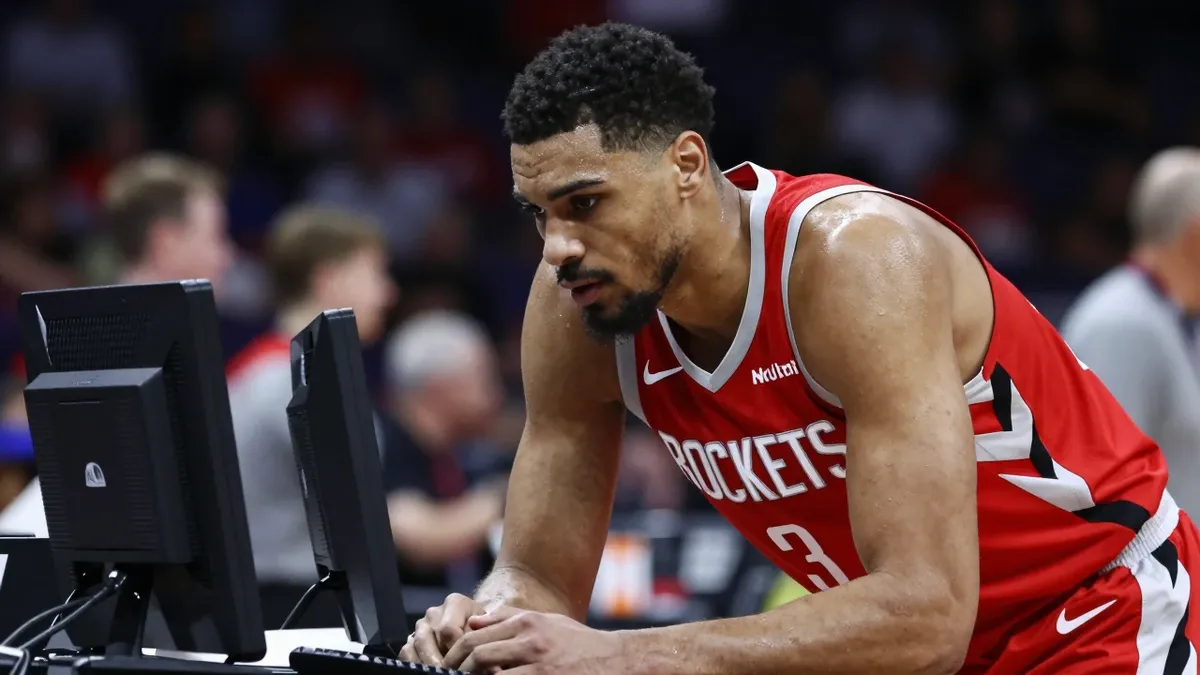
The Houston Rockets possess one of the NBA's strongest second units, a critical factor for any team with serious playoff ambitions. The team's depth will be vital for consistency.
What makes the Rockets' bench so strong?
Head coach Ime Udoka targeted Marcus Smart in free agency for a specific reason. Smart, who won Defensive Player of the Year under Udoka in Boston, provides veteran leadership and a high-IQ defensive presence. He is expected to be the primary ball-handler and playmaker for the second unit, taking pressure off the younger players.
Off the ball, Reed Sheppard is the unit's primary scoring threat. Sheppard had a breakout 2025-26 season, averaging 13.5 points per game in 26.2 minutes. His most impressive skill is his three-point shooting, where he hit 39.4% from deep. With Smart running the offense, Sheppard can focus on moving without the ball and hunting shots. He is a genuine candidate for the Sixth Man of the Year award.
How does the rest of the bench unit fit together?
The veteran wing Bogdan Bogdanović was signed this summer to boost the team's perimeter shooting. His threat from beyond the arc will create important spacing, opening driving lanes for his teammates. At power forward, Tari Eason brings an elite defensive presence with his length and quickness. He is also a relentless rebounder on both ends of the floor.
Steven Adams anchors the interior. Before his injury last season, Adams played 32 games, helping Houston to a 21-11 record in those contests. In 22.8 minutes per game, he averaged 5.8 points and 8.6 rebounds. A staggering 4.5 of those rebounds were on the offensive glass, proving he is among the NBA's elite offensive rebounders. He consistently posted historic offensive rebounding rates near 25%.
Can this depth propel the Rockets in the playoffs?
This collection of talent gives Houston a versatile and dangerous bench. Smart's defense and playmaking, combined with Sheppard's shooting, create a balanced backcourt. Eason and Adams form a physically imposing frontcourt duo that can dominate the glass and protect the paint. Bogdanović's shooting stretches defenses to their breaking point.
For a team looking to improve on a recent up-and-down stretch, this depth is not a luxury but a necessity. The long NBA regular season tests a team's roster from top to bottom. Injuries and fatigue are inevitable, especially during a potential playoff run. A reliable second unit allows the starters to rest without a significant drop in performance. It also provides Coach Udoka with multiple lineup combinations and tactical flexibility. You can track the team's progress and upcoming matchups on our schedule page.
The Rockets' front office has clearly prioritized building a complete roster. While the starting lineup gets most of the attention, games are often won by the contributions of players coming off the bench. Houston's second unit has the experience, skill, and specific roles to make a tangible difference. If they perform to their potential, it absolutely gives the Rockets a legitimate chance to advance deep into the postseason. The team's overall health and consistency will be the final determining factors.